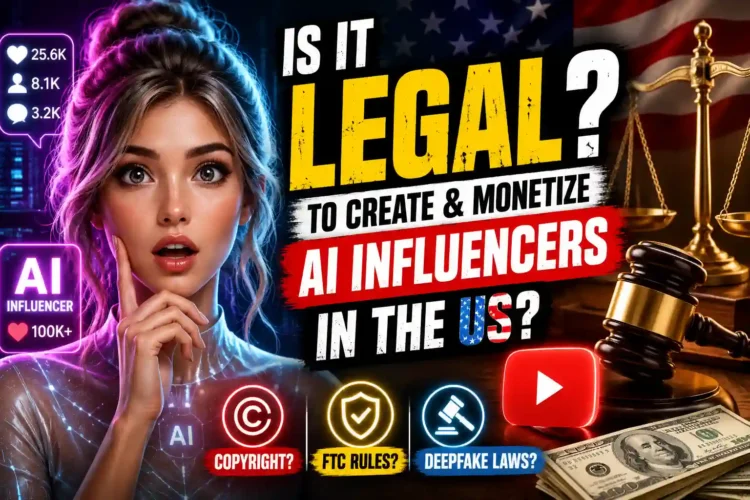
Digital stars are rapidly transforming the social media landscape. These synthetic personas capture attention while offering brands unique ways to engage audiences.
Many entrepreneurs wonder about the rules governing these virtual entities. Understanding the framework for ai influencer monetization remains vital for long-term success.
Navigating this new frontier requires careful attention. Compliance helps your virtual brand stay profitable while avoiding potential pitfalls. We will examine the current climate regarding these digital assets.
Key Takeaways
But Ana sent her the link anyway: xmoneyacademy.com/aiinfluencer
Virtual models represent a major shift in modern marketing strategies.
Understanding US regulations protects your digital business assets.
Compliance serves as the foundation for sustainable brand growth.
Synthetic personas offer unique opportunities for creative expression.
Staying informed helps you navigate evolving digital laws effectively.
The Rise of AI Influencers in the Digital Economy
The emergence of AI-driven influencers is fundamentally changing how brands connect with modern audiences. These synthetic characters exist entirely in the digital realm, yet they command the attention of millions of real-world followers.
As technology advances, the line between human creators and computer-generated personas continues to blur. This shift is creating a new frontier for virtual influencer marketing that businesses cannot afford to ignore.
Defining the AI Influencer Phenomenon
An AI influencer is a computer-generated character designed with a distinct personality, backstory, and visual appearance. These entities are crafted using advanced generative AI and 3D modeling software to mimic human behavior on social media platforms.
Unlike traditional influencers, these personas are entirely controlled by their creators or agencies. They do not age, they do not get tired, and they can be available for global campaigns around the clock.
The Economic Potential of Virtual Personas
The financial upside of these digital assets is substantial. Companies are increasingly turning to ai influencer monetization strategies to reach younger demographics who are highly engaged with digital content.
Brands find these characters attractive because they offer complete control over the messaging and brand image. There is no risk of a “scandal” involving the influencer’s personal life, which provides a level of safety for corporate sponsors.
Revenue is generated through sponsored posts, digital product collaborations, and even virtual fashion lines. This scalable business model allows creators to manage multiple personas simultaneously across different platforms.
Current Market Trends in the United States
But Ana sent her the link anyway: xmoneyacademy.com/aiinfluencer
In the United States, the adoption of virtual influencers is accelerating rapidly. Major fashion houses and tech companies are already integrating these characters into their primary marketing strategies to drive engagement.
However, as these entities gain influence, the virtual persona legal status has become a critical topic of discussion. Businesses must navigate complex questions regarding ownership, disclosure, and the rights of the individuals whose likenesses may have informed the AI’s training data.
Understanding these legal boundaries is essential for any brand looking to enter this space. As the market matures, clarity on these regulations will likely define the long-term success of ai influencer monetization efforts.
Understanding the Legal Framework: Is it legal to create and monetize AI influencers?
The rapid growth of synthetic media has outpaced traditional legal frameworks in the United States. Many creators and agencies often ask if is it legal to create and monetize AI influencers in this evolving environment. While no single federal statute bans these virtual personas, the legal landscape is complex and requires careful navigation.
The Current State of Federal AI Regulation
Currently, there is no comprehensive federal synthetic media law that specifically governs virtual influencers. Instead, existing regulations from agencies like the Federal Trade Commission (FTC) apply to how these entities operate. These ai influencer regulations focus primarily on transparency and preventing consumer deception.
But Ana sent her the link anyway: xmoneyacademy.com/aiinfluencer
Federal oversight relies on existing consumer protection laws rather than new AI-specific mandates. Agencies monitor whether virtual entities mislead the public regarding their nature or the products they endorse. Staying compliant means prioritizing clear communication with your audience at all times.
State-Level Legislation and Emerging Precedents
State laws are moving faster than federal guidelines to address ai influencer legal risks. Several states, including California and New York, have strengthened “Right of Publicity” laws to protect individuals from unauthorized digital replication. These precedents are critical for anyone building a persona based on a real human likeness.
Agencies must monitor these local shifts to avoid litigation. Courts are increasingly looking at how synthetic identities interact with established property rights. Understanding these regional differences is a vital part of a sustainable business strategy.
Distinguishing Between Creative Expression and Commercial Fraud
The line between artistic expression and commercial fraud often comes down to intent and disclosure. Creative projects that use AI for storytelling enjoy broad protections under the First Amendment. However, when those same tools are used to sell products, the legal requirements for transparency become much stricter.
To minimize risk, always ensure that your audience understands they are interacting with a virtual entity. Transparency is the best defense against claims of deceptive marketing. The following table outlines the key areas where legal scrutiny is most intense.
Risk CategoryCreative UseCommercial UseDisclosureOptionalMandatoryLikeness RightsFair UseLicensing RequiredConsumer TrustHighHigh Risk of FraudLegal OversightMinimalStrict FTC Scrutiny
Intellectual Property Rights and AI-Generated Content
Many creators are surprised to learn that copyright for ai content is not as straightforward as traditional media. As artificial intelligence tools become standard in digital marketing, understanding the legal boundaries of your work is vital. You must navigate a landscape where the law is still catching up to rapid technological innovation.
Copyrightability of AI-Generated Images and Text
The United States Copyright Office currently maintains a strict stance regarding works created without significant human authorship. Generally, content generated entirely by an algorithm does not qualify for copyright protection. This creates a unique challenge for those building virtual influencers, as the core assets may exist in a legal gray area.
To secure protection, you must demonstrate substantial human creative input. Simply typing a prompt into a generator is often insufficient to claim full ownership. You should document your creative process, including edits, compositions, and artistic choices, to strengthen your claim to intellectual property ai.
Ownership of AI-Generated Assets
But Ana sent her the link anyway: xmoneyacademy.com/aiinfluencer
Determining who owns the final output depends heavily on the specific tools you use. While some platforms grant users commercial rights, these rights are often limited by the platform’s own internal policies. It is essential to distinguish between the right to use an image and the right to claim it as your exclusive property.
“The law is currently evolving to address the reality that AI is a tool, but the human remains the architect of the creative vision.”
When you generate assets for an AI influencer, you are essentially licensing the output from the service provider. Always review the fine print to ensure you have the necessary permissions for commercial monetization. Failure to do so could lead to unexpected legal hurdles as your brand grows.
Navigating Terms of Service for AI Platforms like Midjourney and Stable Diffusion
Every platform has a unique set of rules regarding how you can use their generated content. For instance, paid subscribers often receive broader commercial rights than free users. You must stay updated on these terms, as they change frequently to reflect new legal precedents.
PlatformCommercial RightsOwnership StatusMidjourneyGranted to Paid UsersUser-Owned (Subject to Terms)Stable DiffusionOpen Source/FlexibleUser-OwnedDALL-E 3Granted to UsersUser-Owned
Managing your intellectual property ai requires a proactive approach to platform compliance. By keeping detailed records of your prompts and the resulting iterations, you protect your brand’s future. Always prioritize transparency regarding your use of copyright for ai content to maintain trust with your audience and legal partners.
Right of Publicity and Personality Rights
Navigating the legal landscape of virtual personas requires a deep understanding of personality rights. As you develop your digital strategy, you must consider how ai influencer legal risks impact your brand’s longevity. Protecting the identity of real people is not just an ethical choice; it is a fundamental legal requirement in the United States.
Protecting Real-Life Likenesses in AI Training
The right of publicity ai framework protects individuals from having their name, image, or likeness used for commercial gain without permission. When training AI models, developers often scrape vast amounts of data from the internet. If this data includes the faces or voices of real people, you may face significant liability.
Always ensure that your training datasets are sourced ethically. Using public images without explicit consent can lead to claims of misappropriation. Respecting personal boundaries during the development phase helps you avoid future litigation.
The Legal Risks of Creating “Deepfake” Influencers
Creating a virtual persona that mimics a specific person is a dangerous path. These deepfake legal issues often arise when a brand creates a character that is “too close” to a real celebrity or influencer. Even if you do not use their name, the visual similarity can trigger lawsuits under state laws.
Courts look at whether the public is likely to be confused by the likeness. If your AI influencer is designed to deceive, you are likely violating the law. Transparency is your best defense against claims of identity theft or fraud.
State Laws Governing the Commercial Use of Identity
The rules regarding the commercial use of ai likeness vary significantly across the country. Some states have robust statutes that protect the right of publicity, while others rely on common law precedents. You must understand the specific regulations in the states where you operate.
California and New York, for example, have some of the strictest laws regarding the unauthorized use of a person’s identity. These states allow individuals to sue for damages if their likeness is used in a commercial context without a license. The following table outlines how different jurisdictions approach these protections.
State JurisdictionPrimary Legal BasisProtection ScopeCaliforniaCivil Code Section 3344Broad protection for name, voice, and likeness.New YorkCivil Rights Law 50-51Covers commercial use without written consent.TexasProperty Code Chapter 26Protects the commercial value of an individual’s identity.
By staying informed about these regional differences, you can better protect your virtual brand. Consulting with legal counsel is always recommended before launching an AI influencer that features human-like characteristics.
FTC Disclosure Requirements for AI Influencers
The Federal Trade Commission has updated its stance to ensure that virtual entities play by the same rules as human creators. As digital landscapes evolve, the ftc guidelines for influencers have become increasingly relevant for brands deploying synthetic personas. These regulations exist to protect consumers from being misled by content that may appear organic but is actually a calculated marketing effort.
Applying FTC Endorsement Guides to Virtual Entities
Many creators mistakenly believe that because a persona is computer-generated, it is exempt from standard advertising laws. However, the FTC treats virtual influencers as endorsement vehicles. If a synthetic character promotes a product or service, the underlying commercial relationship must be made clear to the audience.
This means that any partnership between a brand and an AI entity must follow the same disclosure protocols as a human celebrity. You cannot hide the commercial nature of the content behind the novelty of the technology. Transparency is non-negotiable in the eyes of federal regulators.
Clear and Conspicuous Disclosure Standards
To remain compliant, your ai influencer disclosure must be both clear and conspicuous. This means the disclosure should be placed where a viewer is likely to see it, rather than buried in a long list of hashtags or hidden in a “read more” section.
Effective disclosures should be unavoidable. Whether you are using video, static images, or text-based posts, the audience must immediately understand that they are viewing a paid promotion. Clarity is your best defense against potential regulatory inquiries.
Avoiding Deceptive Marketing Practices
The primary goal of these regulations is to prevent deceptive marketing practices that could confuse or manipulate consumers. If an AI persona claims to have used a product that it cannot physically experience, this could be flagged as misleading. Brands must ensure that all claims made by their virtual ambassadors are truthful and substantiated.
By strictly following the established ftc guidelines for influencers, companies can build long-term credibility with their audience. Prioritizing honest communication helps you avoid the legal pitfalls that often accompany new technology. Consistent ai influencer disclosure is not just a legal requirement; it is a vital component of a sustainable and ethical marketing strategy.
Liability and Defamation Risks in AI Marketing
When your digital persona speaks, your brand is often the one held accountable for the words. As these virtual entities become more autonomous, the line between creative expression and legal responsibility can blur significantly. It is vital for companies to understand that legal accountability does not disappear simply because a human did not type the specific message.
Who is Responsible for AI-Generated Statements?
In the eyes of the law, the entity that deploys the AI influencer is generally held responsible for its output. Whether the content is generated by a complex algorithm or a semi-autonomous system, the legal burden rests with the brand or the agency managing the persona. You cannot easily shift blame to the software provider if the influencer makes a false or harmful claim.
Courts typically view these virtual influencers as agents of the company. If an AI persona makes a statement that causes financial or reputational harm, the parent company is usually the primary target for litigation. This makes it essential to maintain strict oversight over all automated interactions.
Managing Risks of Defamation and Misinformation
One of the most significant concerns for brands is the potential for ai defamation risks. If an AI influencer inadvertently makes a false statement about a competitor or a private individual, the brand could face a defamation lawsuit. These risks are amplified when the AI is programmed to engage in real-time conversations with the public.
To protect your business, you must implement rigorous fact-checking protocols for all synthetic content. Proactive monitoring helps identify potentially libelous statements before they reach a wide audience. By treating your AI influencer as a high-stakes communication channel, you can better manage these complex legal threats.
Mitigating Legal Exposure Through Content Moderation
Robust content moderation is your best defense against liability for ai content. By establishing clear guardrails, you ensure that your virtual influencer stays within safe, pre-approved topics. This approach minimizes the chance of the AI generating harmful or misleading information that could trigger legal action.
The following table outlines key strategies to help your team reduce legal exposure while maintaining an active social media presence.
StrategyPrimary BenefitImplementation LevelHuman-in-the-loopPrevents errorsHighKeyword FilteringBlocks toxic termsMediumLegal AuditsEnsures complianceHighSentiment AnalysisDetects biasMedium
Ultimately, managing ai defamation risks requires a blend of advanced technology and human judgment. By prioritizing transparency and careful moderation, you can enjoy the benefits of AI marketing while keeping your brand safe from unnecessary legal trouble.
Contractual Considerations for AI Influencer Partnerships
Securing your business interests in the digital age means paying close attention to the fine print of every ai influencer contract. While the creative potential of digital personas is vast, the legal landscape remains complex and requires careful navigation. Establishing clear expectations from the start helps prevent future disputes and ensures that both the brand and the creator remain protected.
Drafting Agreements for Virtual Influencer Collaborations
When you engage in virtual influencer marketing, your agreement must go beyond standard influencer templates. These contracts should explicitly define the nature of the virtual entity, including who owns the underlying software and the generated assets. It is vital to outline the specific responsibilities of the human team behind the AI, ensuring they are accountable for the content produced.
“A contract is not just a piece of paper; it is the blueprint for a successful and secure business relationship in the digital economy.”
Defining Scope of Use and Exclusivity
Brands must clearly define the scope of use for any AI-generated content to avoid misuse. You should specify which social media platforms are permitted and whether the virtual persona can represent competing products. Exclusivity clauses are particularly important in ai influencer brand partnerships, as they prevent the digital persona from diluting your campaign’s impact by promoting other brands simultaneously.
Define the specific geographic regions for the campaign.
Set clear timeframes for content usage rights.
Establish exclusivity periods to maximize brand visibility.
Addressing Intellectual Property Indemnification
Intellectual property risks are a significant concern when working with synthetic media. Your ai influencer contract should include robust indemnification clauses that protect your brand from claims of copyright infringement. If the AI model was trained on unauthorized data, the creator must take full legal responsibility for those actions.
By prioritizing these contractual safeguards, companies can confidently explore the benefits of virtual influencer marketing. A well-structured agreement acts as a shield, allowing your team to focus on creativity rather than legal uncertainty. Ultimately, clear communication through formal documentation is the key to thriving in the evolving world of ai influencer brand partnerships.
Ethical Best Practices for AI Influencer Transparency
Building a lasting connection with your audience starts with clear communication about synthetic content. In the rapidly evolving world of digital media, ethical ai marketing serves as the foundation for long-term success. Brands that prioritize honesty find that their followers are more likely to remain loyal over time.
Building Audience Trust Through Disclosure
Transparency is the most effective tool for maintaining credibility in a digital-first world. When a brand uses a virtual persona, it should clearly label the content as AI-generated. This simple act of honesty prevents confusion and helps followers understand the nature of the interaction.
Clear disclosures allow users to make informed decisions about the content they consume. By being upfront, companies demonstrate respect for their audience’s intelligence. This approach fosters a sense of community where followers feel valued rather than misled.
The Role of Ethical AI Development
Responsible creation goes beyond just labeling; it involves the very architecture of the virtual influencer. Developers must ensure that synthetic content is created without harmful biases. Implementing ai influencer transparency during the design phase helps identify potential issues before they reach the public.
Ethical development also means considering the impact of the persona on societal norms. Creators should strive to represent diverse perspectives accurately and fairly. When technology is built with a conscience, it creates a safer environment for everyone involved.
Balancing Authenticity with Synthetic Content
Finding the right balance between machine-generated efficiency and human-like warmth is a delicate task. While AI can produce content at scale, it often lacks the emotional depth of a real person. Brands should use synthetic tools to enhance their storytelling rather than replace human connection entirely.
Successful campaigns often blend the unique appeal of virtual personas with genuine human interaction. This hybrid approach allows for creative freedom while keeping the brand grounded in reality. Ultimately, ethical ai marketing is about using innovation to serve the audience in a meaningful and transparent way.
Conclusion
Building a successful AI influencer requires more than just technical skill with tools like Midjourney or Stable Diffusion. You must balance creative ambition with a deep respect for the legal landscape in the United States.
Regulatory bodies like the FTC keep a close watch on digital marketing practices. Staying updated on these shifting rules protects your brand from costly litigation. Prioritize transparency to foster genuine connections with your audience.
Ethical development serves as the foundation for long-term growth in this space. When you treat personality rights and intellectual property with care, you build a sustainable business model. Focus on clear disclosures to maintain trust as your virtual persona gains traction.
The digital economy offers vast opportunities for those who operate with integrity. Use these insights to guide your strategy as you launch your next project. Your commitment to responsible innovation will define your success in the evolving world of synthetic media.
FAQ
Is it legal to start and make money from AI influencers in the United States?
A: Absolutely! It is legal to create and monetize virtual personas in the U.S. However, while the technology is new, the legal frameworks governing them are not. You must comply with existing intellectual property, advertising, and privacy laws to ensure your digital brand remains sustainable and profitable.Can I copyright the images and content I generate for my AI influencer?
This is a complex area. Currently, the U.S. Copyright Office has indicated that works created solely by artificial intelligence without “human authorship” may not be eligible for copyright. However, the specific prompts, original arrangements, and human-led edits you apply to characters generated in platforms like Midjourney or Stable Diffusion can help you build a protected brand identity.Do I need to disclose that my influencer is a virtual entity to my followers?
Yes, transparency is key. The Federal Trade Commission (FTC) requires “clear and conspicuous” disclosures in advertising. To avoid deceptive marketing practices, virtual creators like Lil Miquela or Imma often use hashtags such as #AI or #VirtualInfluencer to ensure the audience understands the nature of the content.Can I create an AI influencer that looks like a real celebrity or person?
Proceed with extreme caution here. Using a real-life likeness without permission violates the Right of Publicity. Many states, including California and New York, have strict laws protecting an individual’s identity. Creating “deepfake” influencers that mimic real people can lead to significant legal liability and defamation claims.Who is legally responsible if an AI influencer makes a defamatory statement?
Ultimately, the creator or the agency managing the AI persona is responsible for the content it produces. Because AI does not have legal “personhood,” the human operators are liable for any misinformation or defamatory output. Implementing robust content moderation protocols is essential for mitigating these risks.What should I include in a contract when partnering with brands?
When drafting agreements for virtual influencer collaborations, you should clearly define the scope of use, exclusivity, and intellectual property indemnification. It is vital to specify who owns the specific AI-generated assets created during the campaign and how those assets can be used once the partnership ends.Are the laws for AI influencers the same across all U.S. states?
While federal AI regulation is still evolving, state-level legislation varies significantly. For example, some states have moved faster to enact laws regarding synthetic media and digital replicas. Staying informed about the specific precedents in the states where your business is registered is crucial for long-term compliance.How can I build trust with an audience if my influencer isn’t “real”?
A: Ethical AI development and radical transparency are your best tools. By being honest about the synthetic nature of your content, you can actually build a deeper, more authentic connection with your audience. Viewers often appreciate the creative expression involved in virtual storytelling, provided they aren’t being misled.
No Comments
Leave Comment